The Forest Floor in Your Kitchen: Artisan Mushroom Ingredients and the New Umami Pantry
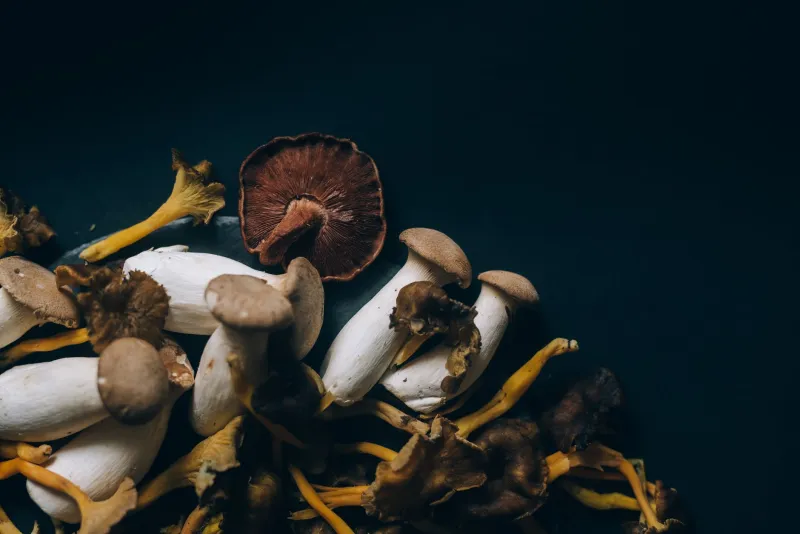
The forest has always been generous to those who know how to read it. Long before the first cultivated mushroom appeared on a grocery shelf, foragers in the Pacific Northwest were filling baskets with chanterelles, porcini, and matsutake. In the Appalachian hollows, morels emerged each spring with the reliability of a seasonal ritual. These were ingredients understood intuitively to carry something that other foods did not — a deep, resonant savoriness that amplified everything around it without announcing itself.
Today, a growing community of American artisan producers is working to bottle, dry, and concentrate that quality, making it available to home cooks in forms that are shelf-stable, precisely formulated, and of genuinely exceptional character. The result is a new category of pantry essential: mushroom-based ingredients that function not as substitutes for anything, but as irreplaceable sources of umami depth in their own right.
Understanding the Umami Architecture of Fungi
The reason mushrooms carry such profound savory character is biochemical. Most edible fungi are rich in glutamic acid — the free amino acid responsible for the umami sensation — as well as guanosine monophosphate (GMP), a nucleotide that synergizes with glutamate to amplify savory perception dramatically. When mushrooms are dried, the concentration of these compounds increases; when they are simmered into a broth or reduced into an extract, the effect intensifies further still.
Different species express this umami architecture differently. Shiitake, the most widely cultivated umami mushroom in the American market, delivers a meaty, woodsy depth with a faint sulfurous sweetness. Porcini (Boletus edulis) bring a nuttier, more complex earthiness with considerable aromatic range. Maitake, known colloquially as hen-of-the-woods, offers a lighter, more herbaceous savoriness. Reishi, lion's mane, and turkey tail — species valued in traditional Chinese and Japanese medicine — contribute bitterness, creaminess, and structural complexity respectively, making them increasingly popular in blended preparations.
Artisan producers who understand these distinctions are creating blends and single-species preparations with the intentionality of a spice merchant composing a masala: each ingredient chosen for what it contributes to the whole, and processed in a manner designed to preserve or enhance its specific character.
The Makers Defining This Category
The American artisan mushroom ingredient space is young but rapidly maturing. Several producers have emerged as genuine leaders in quality and innovation.
Small Forest in Portland, Oregon works with both wild-foraged and sustainably cultivated fungi to produce dried powders and seasoning blends of considerable sophistication. Their single-species porcini powder is a pantry staple among professional cooks in the Pacific Northwest — used in everything from pasta doughs to dry rubs — and their multi-mushroom umami blend has earned a dedicated following among home cooks seeking a clean, concentrated flavor base.
Far West Fungi, a San Francisco Bay Area institution with roots in both cultivation and retail, produces a range of dried mushroom products sourced from their own farm operations and from trusted regional foragers. Their commitment to traceable sourcing gives their products a provenance story that mirrors the best practices of the artisan food world more broadly.
In the broth category, producers such as Brodo — originally a New York City-based bone broth pioneer that has since expanded into mushroom-based preparations — and newer entrants like Smallhold, a Brooklyn-based urban mushroom farm, are demonstrating that liquid mushroom products can carry the same complexity and culinary utility as the finest animal-based stocks, while offering a compelling option for cooks who cook across dietary traditions.
Forms, Functions, and How to Cook with Them
The mushroom pantry, properly assembled, contains several distinct product categories, each with its own applications and logic.
Dried whole or sliced mushrooms remain the most versatile entry point. A small handful of dried shiitake or porcini, rehydrated in warm water for twenty minutes, yields both reconstituted mushrooms for direct use and a deeply flavored soaking liquid that functions as an instant umami-rich stock. Neither should be discarded. The liquid, strained through a fine-mesh sieve, can be added to risottos, braises, gravies, and grain dishes with transformative effect.
Mushroom powders are arguably the most immediately useful artisan product in this category for the home cook. A teaspoon of high-quality porcini powder stirred into a tomato sauce, dissolved into a butter for finishing a steak, or incorporated into a bread dough adds a savory complexity that is difficult to identify but impossible to ignore. Because the powder is already dehydrated and concentrated, its impact is immediate and measurable — no rehydration, no straining, no additional liquid.
Concentrated broths and extracts occupy the upper register of intensity. A tablespoon of mushroom extract — produced by simmering a large volume of fungi to a dense, syrup-like reduction — can anchor a sauce or soup with the kind of depth that would otherwise require hours of conventional cooking. These products reward restraint: a small quantity is sufficient, and more is not always better.
Fermented mushroom preparations, a newer category gaining traction among American artisan producers, apply lacto-fermentation or koji-based processes to fungi, producing products with a layered complexity that combines umami with the brightness of fermentation. These are among the most exciting developments in the space, and they reward the home cook willing to explore beyond the familiar.
Building Your Mushroom Pantry
For those approaching this category for the first time, a practical starting point might include: a bag of high-quality dried shiitake from a trusted domestic producer; a small jar of single-species porcini powder; and one concentrated mushroom broth or stock for use as a quick flavor foundation. These three items, used thoughtfully, will alter the flavor profile of a home kitchen in ways that are difficult to overstate.
As familiarity grows, the collection can expand to include species-specific powders — lion's mane for a subtle seafood-adjacent sweetness, maitake for lighter applications, reishi for bitter complexity in sauces and braising liquids — as well as fermented preparations and blended umami bases suited to specific culinary traditions.
Sourcing matters here as it does throughout the artisan pantry. Look for producers who specify the species, origin, and processing method of their mushrooms, and who work with either certified organic cultivation operations or with foragers who practice sustainable harvesting. The American Mushroom Institute maintains resources for consumers interested in understanding domestic mushroom production standards.
An Ancient Ingredient, Newly Articulated
The mushroom has been a culinary cornerstone in cultures across Asia and Europe for millennia. What American artisan producers are contributing is not a discovery but a translation — taking an ancient understanding of fungal flavor and rendering it in forms suited to the contemporary home kitchen, with the sourcing transparency and quality discipline that discerning cooks have come to expect from the best of the American artisan food movement.
The forest, it turns out, has always had something extraordinary to offer. The work of these makers is simply to bring more of it to the table.