Cultured, Churned, and Considered: The American Creameries Restoring Depth to Dairy
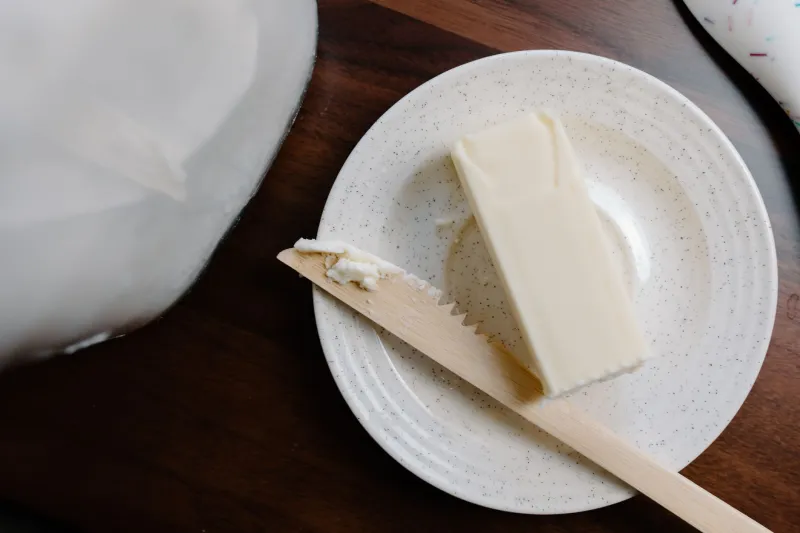
There is a moment, familiar to anyone who has spread a well-made cultured butter across warm bread, when the mundane becomes revelatory. The color is deeper than you expected — golden, almost amber at the edges. The aroma carries a faint, pleasing acidity. The flavor lingers. It is the kind of experience that makes you pause and reconsider every recipe you have ever made with the pale, flavorless blocks from a conventional grocery shelf.
This is precisely the experience that a growing community of American artisan creameries has been working to restore. Quietly, methodically, and with considerable devotion to craft, small-scale dairy producers across the country are reviving pre-industrial techniques — culturing cream with live bacterial cultures, sourcing milk from heritage breeds, and churning slowly to develop flavor rather than simply to separate fat. The results are extraordinary, and they deserve a permanent place at the center of the serious American kitchen.
What Industrialization Took Away
For most of the twentieth century, butter was treated as a commodity. Standardization was the governing principle: uniform fat content, consistent color achieved through annatto dye, and flavor profiles engineered to offend no one. Cream was pasteurized at high temperatures, homogenized for shelf stability, and stripped of the microbiological complexity that once gave dairy its distinctive regional character.
Before this era of industrial consolidation, American dairy was genuinely diverse. Butter from a Vermont farmstead tasted different from butter churned in the Willamette Valley. Cream from a Jersey cow was richer and more golden than that from a Holstein. These differences were not flaws to be corrected — they were expressions of place, breed, and season. The artisan dairy revival is, in essence, an act of recovery.
The Role of Culture and Time
At the heart of this movement is the practice of culturing cream before churning. Unlike sweet cream butter — the American commercial standard — cultured butter begins with cream that has been inoculated with live bacterial cultures and allowed to ferment gently over many hours. This process develops lactic acid, which introduces a complex, slightly tangy flavor profile reminiscent of fine European-style butters, though American makers are increasingly developing their own distinct cultural signatures.
Creameries such as Vermont Creamery, which has long championed cultured butter in the American market, and smaller operations like Ploughgate Creamery in Fayston, Vermont — whose grass-fed cultured butter has earned considerable praise among food professionals — demonstrate that patience and biological complexity are inseparable. The longer the cream cultures, and the more carefully the temperature is controlled, the more nuanced the finished product becomes.
Beyond butter, cultured creams — crème fraîche, cultured heavy cream, and clotted cream-style preparations — are receiving similar attention. These products offer home cooks a range of textures and acidities unavailable in standard supermarket dairy sections, and they perform differently in cooking: crème fraîche, for instance, does not break when reduced in a warm pan, making it an invaluable finishing element for sauces and braises.
Heritage Breeds and the Question of Milk
The quality of any dairy product begins, inevitably, with the milk. Artisan creameries are increasingly turning to heritage and dual-purpose breeds — Jerseys, Guernseys, Brown Swiss, and Milking Shorthorns — whose milk is naturally higher in butterfat and contains a different casein protein structure than that of the Holstein, the dominant commercial breed. Jersey and Guernsey milk, in particular, is rich in beta-carotene, which gives pasture-raised butter its characteristic golden hue without the need for any artificial coloring.
Several American producers are also working with raw milk, where state regulations permit, arguing that the living enzymes and microbiological complexity preserved in unpasteurized cream contribute measurably to flavor. This remains a legally complex area — raw milk butter is legal to sell across state lines under certain conditions, and state laws governing raw milk sales vary considerably — but for cooks who have access to raw milk butter from a trusted local source, the flavor difference can be striking.
Seasonal Variation as a Feature, Not a Flaw
One of the more philosophically significant shifts in artisan dairy culture is the embrace of seasonal variation. Industrial butter is engineered to taste the same in January as it does in July. Artisan butter does not make this promise — and this is considered a virtue.
When cows graze on spring and early summer pasture, their milk is richer in carotenoids and omega-3 fatty acids, and the resulting butter is noticeably more golden and complex. In winter, when animals move to stored feed, the butter lightens in color and shifts subtly in flavor. Rather than masking these changes, thoughtful creameries celebrate them, sometimes noting the season or the predominant forage on their packaging. For the home cook who pays attention, this creates an invitation to cook seasonally not just with vegetables and proteins, but with fat itself.
Building a Dairy Pantry Worth Celebrating
For those new to artisan dairy, the entry point is straightforward: begin with a cultured, grass-fed butter from a domestic producer and use it somewhere its flavor will be apparent — melted over roasted vegetables, stirred into a simple pasta, or spread, unadorned, on good bread. The difference from a conventional product is immediately legible.
From there, consider building a small collection. A jar of crème fraîche from a local creamery or a trusted specialty purveyor transforms a weeknight pan sauce or a simple bowl of berries into something of genuine distinction. Clarified butter made from high-quality cultured stock — or its cousin, ghee, produced by a number of American artisan makers using grass-fed dairy — offers a shelf-stable cooking fat of remarkable depth and versatility.
Many of these products are now available through specialty food retailers, farmers' markets, and direct-to-consumer creamery websites, making them more accessible than ever to home cooks outside major metropolitan areas. Organizations such as the American Cheese Society also maintain resources that can help consumers locate quality dairy producers in their region.
Fat as Foundation
The resurgence of artisan butter and cream reflects a broader truth about how discerning cooks are beginning to think about their kitchens: that quality does not begin with a headline ingredient and end with supporting elements. Fat is foundational. It carries flavor, mediates texture, and shapes the character of nearly every dish it touches. When that fat is itself complex, cultured, and carefully made, it elevates everything it meets.
The American creameries working in this tradition are not offering novelty. They are offering something older and more enduring: the honest flavor of milk, transformed by craft, time, and a genuine respect for the animal and the land that make it possible. That is an abundance worth seeking out.