Leaf, Stem, and Blossom: The American Tea Artisans Bringing Botanical Complexity to the Culinary Kitchen
Consider the dried hibiscus flower for a moment. Steeped in hot water, it produces a tart, cranberry-colored infusion that is pleasant enough in a mug. Simmered briefly into a reduction with a little honey and black pepper, it becomes a glaze for duck breast of genuine sophistication. The difference between these two outcomes is not the ingredient—it is the cook's understanding of what that ingredient is capable of.
Across the United States, a community of specialty tea blenders and botanical artisans is working to expand precisely that understanding. These are not the large commercial tea houses packaging commodity blends in paper sachets. They are small-scale producers—often trained in herbalism, botany, or culinary arts—who source single-origin leaves, rare dried flowers, and heritage herbs with the same deliberateness a spice merchant brings to a collection of whole dried chiles. And they are beginning to speak directly to cooks, not merely to tea drinkers.
Beyond the Cup: A New Vocabulary for Botanical Ingredients
The shift in how specialty tea is framed—from beverage to culinary ingredient—is not merely a marketing reposition. It reflects a genuine expansion of the product itself. When a small-batch blender in Asheville, North Carolina, combines Darjeeling first flush with dried lemon verbena and a whisper of dried ginger, they are constructing a flavor profile that has immediate applications in a poaching liquid for pears, a brine for chicken thighs, or a granita that captures the brightness of late spring. The ingredient is designed to contribute flavor, not simply to steep and be discarded.
Several categories of botanical products lend themselves particularly well to culinary application.
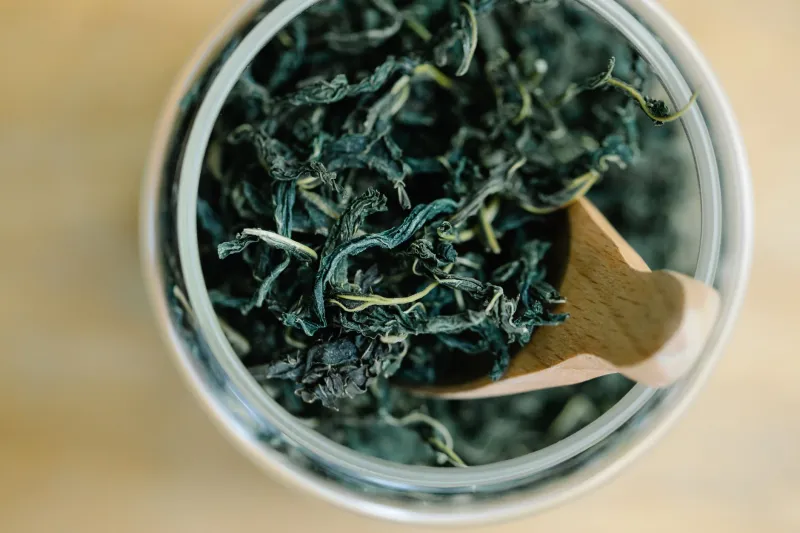
Single-origin black teas from specialty importers who work with small estates in Assam, Yunnan, or the Nilgiris carry tannin structures and aromatic compounds that function beautifully in braises and marinades. A strong Assam steeped directly into a braising liquid for short ribs adds a subtle astringency that cuts through the richness of the meat in much the same way that coffee does in a classic Texan pot roast—but with greater delicacy.
Smoked teas, particularly lapsang souchong and its American-made approximations, have long been used by knowledgeable cooks to introduce a clean, campfire smokiness to preparations without the commitment of actual smoking equipment. A small amount steeped into a cream sauce or blended into a compound butter delivers complexity that would otherwise require significant effort.
Herbal and botanical blends built around dried chamomile, rose petals, lavender, or elderflower offer pastry cooks and dessert-minded home cooks an extraordinary range of aromatic possibilities. Infused into cream, custard, or simple syrup, these botanicals impart flavors that are simultaneously familiar and unexpected.
The Artisans Leading the Way
What distinguishes the most compelling American tea blenders from their commercial counterparts is their commitment to ingredient sourcing. The best among them can name the farm from which their Taiwanese oolong originates, describe the harvest year of their dried lavender, and explain why they chose a particular variety of peppermint for its menthol content relative to its sweetness. This level of knowledge is not incidental—it is the foundation on which culinary utility is built.
Some producers are now packaging their blends with explicit culinary guidance, noting on the label that a given chamomile and honey bush blend is suited to infusing into panna cotta, or that a particular smoked black tea blend functions well as a dry rub component when ground fine. This kind of direct communication between maker and cook represents a maturation of the American specialty tea market that serious pantry builders would do well to notice.
Several small producers in the Pacific Northwest are also experimenting with locally grown botanical ingredients—Douglas fir tips, Oregon grape, Cascara (the dried husks of coffee cherries)—that give their blends a distinctly regional character unavailable anywhere else. For a cook interested in expressing the flavors of a particular American landscape, these ingredients offer remarkable possibilities.
Practical Applications for the Culinary Pantry
Building a tea-forward culinary pantry does not require an exhaustive collection. A handful of well-chosen blends, stored in airtight tins away from light and heat, will serve most cooking purposes admirably.
For brining and poaching: A robust black tea—Assam, Yunnan, or a quality English breakfast blend—produces a tannin-rich liquid that functions as an excellent base for brining poultry or pork. Steep several tablespoons of loose leaf tea in near-boiling water, allow it to cool, then incorporate it into your standard brine formula. The result is meat with a subtle aromatic complexity that salt and sugar alone cannot provide.
For desserts and custards: Floral and herbal blends—chamomile, rose, lavender, or Earl Grey—infuse beautifully into warm dairy. The technique is straightforward: bring cream or milk to a gentle simmer, remove from heat, add the botanical blend, steep covered for ten to fifteen minutes, then strain. The infused dairy can then be used in any recipe calling for cream, from ice cream base to crème brûlée.
For cocktails and shrubs: Strongly brewed botanical teas make exceptional bases for shrubs and cocktail syrups. A hibiscus and rose hip blend, reduced with apple cider vinegar and cane sugar, produces a shrub of vivid color and bright acidity that works equally well in a sparkling water spritz or as an accompaniment to a bourbon cocktail.
For savory applications: Ground dried tea—particularly smoked varieties or those with strong tannin and earthiness—can be incorporated into spice rubs, flour dredges for fried chicken, or even pasta dough for a subtle aromatic note.
Sourcing with Intention
As with any specialty ingredient, the quality of culinary tea blends varies enormously. When evaluating a new producer, examine their sourcing language carefully. Vague references to "premium ingredients" or "carefully selected botanicals" are less reassuring than specific mentions of estate, region, or harvest season. A blender who can speak concretely about their ingredients is almost invariably a blender worth trusting.
The American specialty tea market, once a relatively modest corner of the broader food landscape, has become something far more interesting. For the home cook who approaches the pantry as a collection of living, versatile ingredients rather than a static reserve of condiments, the botanical blends now available from American artisans represent an abundant and largely underutilized resource. The teacup, it turns out, is only the beginning.