The Slow Simmer: How America's Craft Broth Makers Are Restoring Depth to the Modern Kitchen
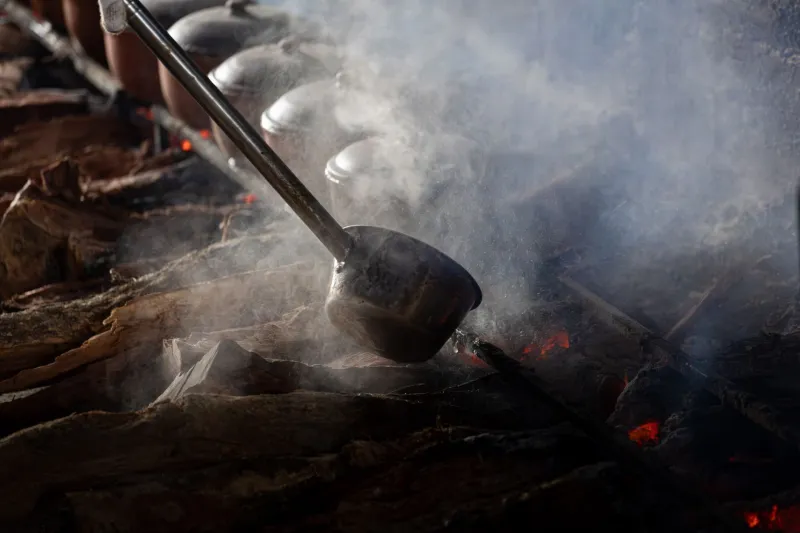
There is a particular kind of kitchen alchemy that cannot be rushed. It requires bones, water, aromatic vegetables, and the one ingredient that no amount of money can purchase outright: time. For much of the twentieth century, this alchemy was largely abandoned by the American home cook, displaced by shelf-stable cubes, powdered concentrates, and sodium-laden canned liquids that offered convenience at the expense of character. Today, a generation of small-batch producers is reclaiming what was lost — and in doing so, they are quietly reshaping the foundations upon which home cooking rests.
The artisan broth and bone stock movement is, at its core, a story about patience rewarded. These are producers who source grass-fed beef bones from regional farms, pasture-raised poultry from independent growers, and wild-caught fish frames from sustainable fisheries. They simmer their stocks for hours — sometimes days — skimming, adjusting, and tending with the attentiveness of craftspeople who understand that the final product is only as distinguished as the ingredients and care that precede it.
Why the Broth in Your Pantry Matters More Than You Think
It is tempting to regard stock as a background ingredient, something that disappears into a sauce or a braise without commanding particular attention. This view, however, underestimates the role that a well-made foundation plays in the finished dish. A broth carrying genuine collagen from long-simmered bones will lend body and a subtle richness that no commercial shortcut can replicate. The gelatin released during an extended simmer transforms a liquid from thin and watery to something that coats a spoon with quiet authority — a quality professional kitchens have long prized and that artisan producers are now making accessible to the home table.
Beyond texture, provenance matters. When a producer sources bones from animals raised on open pasture, finished on grass, and processed with care, the resulting broth carries a flavor complexity that reflects those choices. Terroir, a concept long associated with wine and increasingly applied to honey, salt, and cheese, is equally relevant here. A beef bone broth made from cattle raised in the high meadows of Colorado tastes meaningfully different from one assembled from commodity bones of uncertain origin. That difference is precisely what the artisan producers in this space are offering.
Makers Worth Knowing
Across the country, a handful of dedicated producers have distinguished themselves through their commitment to sourcing and method. In the Pacific Northwest, small operations have built reputations on long-simmered chicken stocks made exclusively from heritage breed birds, with roasting times that develop a golden depth before a single drop of water is added to the pot. In the Northeast, producers working in close partnership with grass-fed beef farms have developed concentrated bone broths that arrive in the kitchen nearly gelatinous at room temperature — a reliable indicator of collagen-rich quality.
The South, with its deep tradition of pot likker and slow-cooked everything, has seen particular enthusiasm for pork-based stocks and smoked bone broths that carry the region's characteristic warmth. Meanwhile, coastal producers in the Mid-Atlantic and New England have turned their attention to seafood stocks built from the frames and shells that most kitchens discard — a resourceful approach that yields broths of remarkable delicacy, suited to bisques, risottos, and the most refined pan sauces.
What these makers share, regardless of geography or base ingredient, is a philosophy that treats broth not as a byproduct or an afterthought but as a finished product deserving the same careful attention one would give to an aged vinegar or a single-varietal olive oil.
How to Select a Craft Broth with Confidence
Navigating the growing marketplace of artisan broths requires a few guiding principles. The first is to examine the ingredient list with the same scrutiny you would apply to any premium pantry purchase. A well-made bone broth should contain bones, water, vegetables, and perhaps a modest selection of aromatics. The presence of added flavors, yeast extracts, or excessive sodium is a reliable signal that the maker has compensated with additives for what the simmer did not develop naturally.
The second indicator is physical behavior. A quality broth made with an abundance of collagen-rich bones will gel when refrigerated. This is not a defect; it is evidence of the very quality you are seeking. When warmed, it will return to liquid form with its character fully intact.
Third, consider the sourcing language on the label. Producers who name their farm partners, specify the breed of animal, or describe their sourcing region are generally those most committed to the integrity of their product. Vague claims of "natural" or "wholesome" carry far less weight than specific, verifiable provenance.
Finally, seek out producers who offer concentrates alongside ready-to-use broths. A well-made concentrated stock, reduced to a fraction of its original volume, offers remarkable versatility and economy. A single jar can deepen a weeknight pan sauce, enrich a grain dish, or form the backbone of a weekend braise without requiring the cook to commit to a full carton of liquid.
Building a Flavor Foundation: Practical Applications
For the home cook ready to invest in a small collection of artisan stocks, the returns are immediate and wide-ranging. A fine chicken stock becomes the vehicle through which a simple risotto achieves the kind of layered, satisfying depth that distinguishes a memorable meal from a merely adequate one. A concentrated beef bone broth, stirred into the braising liquid for short ribs or used to deglaze a pan after searing, introduces a richness that elevates the entire dish without announcing itself.
Fish stocks, often overlooked by home cooks who find them intimidating to prepare, are among the most rewarding pantry additions for those who enjoy seafood. A quality fumet — the French term for a light, aromatic fish stock — transforms a simple poached fillet into something approaching restaurant elegance, and forms the foundation of a proper bouillabaisse or chowder that no clam juice can approximate.
Perhaps the most compelling argument for keeping artisan broth in the pantry is its ability to rescue the ordinary. A simple vegetable soup built on a quality chicken stock becomes something worth sharing. A quick pan sauce assembled from browned fond and a splash of concentrated bone broth becomes a reason to cook more deliberately.
An Ingredient Deserving of a Permanent Place
The artisan broth movement is, in many respects, a reclamation project — a return to the understanding that good cooking begins long before any particular dish takes shape. The stockpot, in the hands of a skilled and patient producer, becomes a vessel for preserving the best qualities of carefully raised animals and thoughtfully sourced ingredients. What arrives in your kitchen is not simply a liquid but a foundation: the cumulative result of good husbandry, careful sourcing, and hours of unhurried simmering.
For those who take pleasure in building a pantry of genuine quality, a selection of artisan broths and bone stocks belongs alongside the aged vinegars, the single-origin spices, and the heritage grain flours that define a kitchen committed to abundance and flavor. These are the quiet cornerstones — the ingredients that ask for no particular recognition but make everything built upon them unmistakably better.