The Three Pillars of Dashi: American Producers Bringing Japanese Broth Culture to the Domestic Pantry
There is a particular kind of flavor that announces itself not with boldness but with depth — a quality that lingers in the background of a dish, amplifying everything around it without drawing attention to itself. Japanese cooks have understood this quality for centuries and given it a name: umami. And the vehicle through which umami most elegantly enters a dish is dashi, the foundational broth at the heart of Japanese culinary tradition.
For much of American culinary history, dashi was either imported or ignored. Yet a growing cohort of domestic producers — farmers cultivating sea vegetables along the coasts of Maine and California, small-batch processors working with dried mushrooms from the Pacific Northwest, and artisan fisheries exploring traditional preservation methods — are changing that calculus entirely. The result is a quietly unfolding pantry revolution that deserves the full attention of any cook who values flavor above convenience.
What Dashi Actually Is, and Why It Matters
Dashi is not stock in the Western sense. It requires no long simmering, no roasted bones, no bouquet garni. Instead, it is an act of patient extraction: cold- or gently warm-steeping a small selection of intensely flavored dried ingredients in water until their soluble compounds — glutamates, inosinates, guanylates — dissolve into a broth of startling clarity and complexity.
The three classical components of dashi each contribute a distinct dimension of umami. Kombu, a dried kelp, delivers glutamates in concentrated form; bonito flakes, shaved from dried and fermented skipjack tuna, add inosinates that create a synergistic amplification when combined with kombu; and dried shiitake mushrooms contribute guanylates, a third and distinct umami compound that deepens the overall profile considerably. Together, these three ingredients form what might reasonably be called the umami triumvirate — and learning to work with even one of them will perceptibly elevate a cook's output.
The Domestic Kombu Question
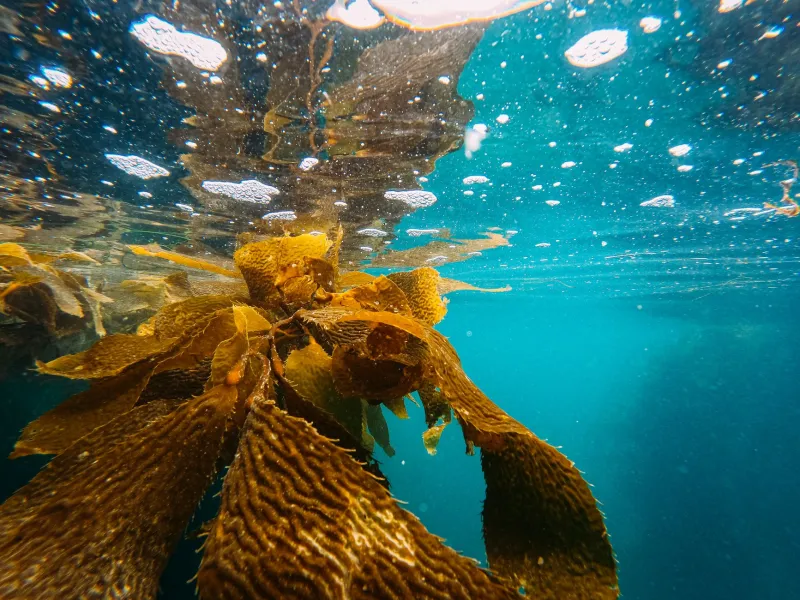
For years, the word "kombu" was nearly synonymous with Japan, and specifically with the cold waters surrounding Hokkaido. American cooks who sought quality had little choice but to rely on imports. That situation is shifting. Maine, with its cold, nutrient-rich Atlantic waters, has emerged as an unlikely but entirely legitimate source of kelp with genuine culinary merit.
Producers such as those working under the Maine Seaweed Council's sustainable harvesting guidelines are drying and packaging Saccharina latissima — Atlantic sugar kelp — with the care and attention to post-harvest handling that determines whether kelp arrives in your pantry as a flat, chalky afterthought or as a deeply fragrant, mineral-rich ingredient. The white powder visible on quality dried kelp is mannitol, a naturally occurring sugar compound and a reliable indicator of proper drying and storage. Discerning buyers are learning to look for it.
Pacific kelp from California and Washington state is equally available, with producers along the Mendocino Coast and Puget Sound harvesting bull kelp and giant kelp with increasing sophistication. The flavor profiles differ subtly — Atlantic kombu tends toward a cleaner, more restrained minerality, while Pacific varieties often carry a more pronounced oceanic character — and serious cooks are beginning to treat these distinctions with the same interest they might apply to single-origin salt or varietal olive oil.
Bonito and Its American Analogues
Traditional katsuobushi — the dried, fermented, and smoked bonito that is shaved into the delicate flakes used in dashi — remains one of the most labor-intensive preserved foods in any culinary tradition. Authentic production takes months, involves repeated smoking and mold cultivation, and has no true shortcut. American producers have not yet replicated this process at scale, and intellectual honesty demands acknowledging that gap.
What is emerging, however, is genuinely exciting. A handful of American artisan fisheries and smokehouse operators are producing smoked and dried fish products — from skipjack to albacore to Pacific bonito — that, while not identical to katsuobushi, deliver inosinate-rich depth when used thoughtfully. These products occupy a distinct category: not Japanese in method, but aligned in spirit, and capable of building broths of real character.
For the home cook committed to the most authentic approach, high-quality imported katsuobushi remains a legitimate pantry staple. The discernment lies not in rigid localism but in understanding what each product offers and sourcing accordingly.
Dried Mushrooms and the Pacific Northwest Advantage
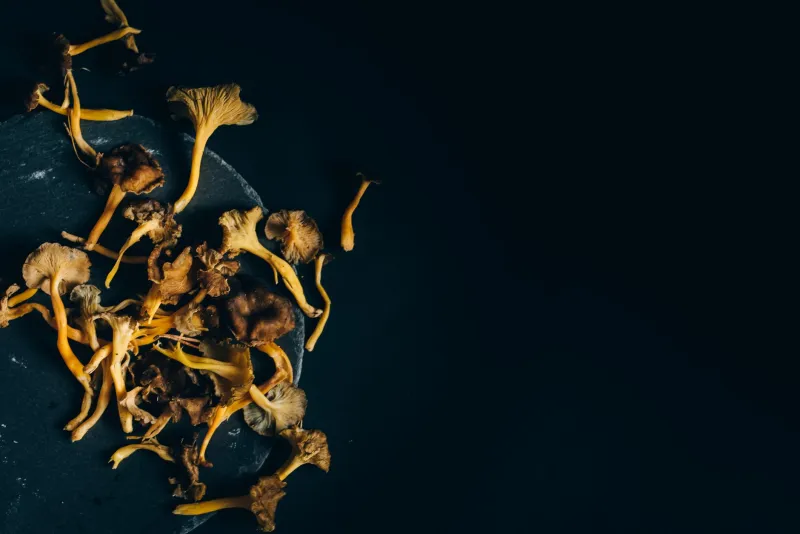
If any element of the dashi pantry belongs unambiguously to American producers, it is the dried shiitake. The Pacific Northwest has long been home to sophisticated mushroom cultivation operations, and the quality of dried shiitake available from small American farms — particularly those employing traditional log cultivation rather than sawdust substrate — is exceptional by any standard.
Log-grown shiitake develop a more complex cell structure that translates, upon drying, into a more concentrated and nuanced flavor. Producers in Oregon, Washington, and Northern California are now offering dried shiitake specifically marketed toward culinary use, with attention to slice thickness, drying temperature, and storage conditions that mass-market products rarely match. The resulting broth — made by cold-steeping these mushrooms overnight in filtered water — carries a depth and richness that is difficult to describe without the word "profound."
Beyond shiitake, American producers are also exploring dried porcini, maitake, and lion's mane as dashi components, each bringing a different aromatic signature and a different umami compound profile. These are not traditional Japanese ingredients, but they represent a legitimate American contribution to the broader culture of umami-conscious cooking.
Building the Dashi Pantry
For the home cook approaching dashi for the first time, the practical entry point is simpler than it may appear. Begin with kombu. A cold infusion — kombu submerged in cold water for thirty minutes to several hours, then gently warmed without boiling — produces a broth of quiet elegance that will immediately improve miso soup, braising liquids, and grain-cooking water. Add a handful of quality dried mushrooms to that cold steep and the complexity multiplies.
The full ichiban dashi — first-drawn broth using both kombu and bonito flakes — requires only slightly more attention and rewards that attention generously. The kombu is removed just before the water reaches a simmer; the bonito flakes are added, allowed to steep briefly, and then strained. The resulting liquid is the foundation upon which an enormous range of Japanese dishes are built, and it takes, at most, twenty minutes.
The abundance that Blessings Cornucopia celebrates in every corner of the American artisan food landscape is present here, too — in the kelp beds off the Maine coast, in the log mushroom farms of the Willamette Valley, in the careful hands of producers who understand that flavor begins long before it reaches a pan. The dashi pantry is not an exotic indulgence. It is, for any cook who values depth over volume, an essential one.