From the Shoreline to the Shelf: America's Sea Vegetable Harvest and Its Place in the Considered Pantry
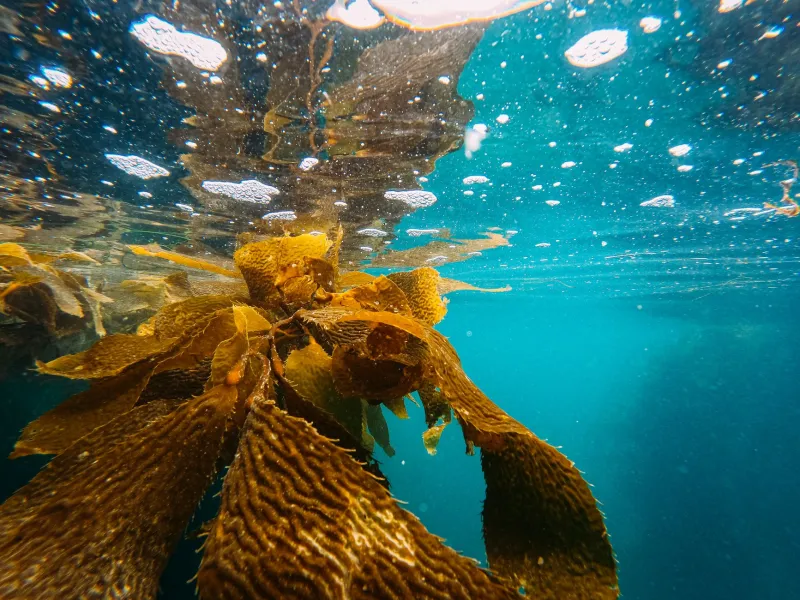
The American pantry has always been shaped by geography. The great grain belts of the Midwest gave us flour and cornmeal as foundational staples; the apple orchards of New England and the Pacific Northwest gave us vinegar and cider; the salt marshes of the Atlantic and Gulf coasts gave us the crystalline minerals that season our tables. It is perhaps overdue, then, that the coastlines themselves — the actual shoreline, with its tidal zones and kelp forests and rocky intertidal flats — are beginning to contribute their own extraordinary ingredients to the serious home cook's repertoire.
Sea vegetables have been consumed by coastal peoples around the world for millennia. In Japan, Korea, Ireland, Iceland, and coastal West Africa, dried seaweeds have served as both food and flavoring for as long as those cultures have had kitchens. In the United States, that tradition was largely absent from mainstream culinary culture until recently, with seaweed appearing primarily in Japanese restaurants or health food stores, marketed more for its nutritional profile than its flavor. That framing, useful as it may have been in introducing the ingredient, has also been limiting. It is time to consider sea vegetables on purely culinary terms — and on those terms, they are remarkable.
The Geography of American Sea Vegetables
The United States possesses two coastlines of extraordinary biological richness, each supporting distinct sea vegetable communities with different flavor profiles and culinary applications.
The Gulf of Maine, with its cold, nutrient-dense waters, is home to some of the most productive wild seaweed habitat in the North Atlantic. Sugar kelp (Saccharina latissima), winged kelp (Alaria esculenta), rockweed (Ascophyllum nodosum), Irish moss (Chondrus crispus), and the extraordinary dulse (Palmaria palmata) all grow in abundance along the Maine coast, and a thriving community of harvesters — operating under state licensing requirements and, in many cases, self-imposed sustainability standards that exceed regulatory minimums — is bringing these species to market with increasing culinary sophistication.
The Pacific Coast, from Northern California through Oregon and Washington to Alaska, supports a different but equally compelling array of species. Giant kelp (Macrocystis pyrifera) forms vast underwater forests off the California coast; bull kelp (Nereocystis luetkeana) dominates the Pacific Northwest; and wild nori (Porphyra and related species) grows in the intertidal zones of rocky Pacific shores. Producers in this region are harvesting and processing these species with methods adapted from both Japanese tradition and original American practice.
Dulse: The Gateway Ingredient
For the home cook encountering sea vegetables for the first time, dulse is the logical starting point. This burgundy-red seaweed, harvested primarily from the cold waters of the Gulf of Maine and the Bay of Fundy, has a flavor profile that is at once oceanic and deeply savory — umami-forward in a way that is immediately legible to Western palates, without the more challenging mineral intensity that some other seaweeds can present.
Dried dulse can be eaten directly from the bag as a snack of considerable satisfaction, and several Maine producers are now offering lightly pan-fried dulse — a preparation that transforms the dried leaf into something with the crispness and salty depth of a premium chip, without any of the industrial processing that term implies. In cooking, whole dried dulse can be added to soups and stews as a flavor base, crumbled into grain dishes, or incorporated into compound butters. Dulse powder — available from a number of domestic producers — functions as a finishing seasoning of real versatility, adding umami depth to roasted vegetables, egg dishes, and even popcorn in a way that is difficult to achieve with any other single ingredient.
Kelp as Pantry Architecture
If dulse is the approachable entry point, kelp is the architectural ingredient — the one that, once understood, changes how a cook thinks about flavor foundations. The glutamate content of dried kelp is among the highest of any food source, which means that adding kelp to a cooking liquid is not merely adding flavor but actively amplifying all the other flavors present. This is the principle that underlies Japanese dashi, but it applies equally well in Western cooking contexts.
American kelp producers are now offering a range of formats designed for different kitchen applications. Whole dried fronds are available for dashi preparation and long braises; kelp flakes can be added to spice blends and grain-cooking water; kelp powder functions as a seasoning with a rounded, savory character that differs from salt in its mechanism of action — it does not simply add saltiness but increases the perceived depth and complexity of everything it touches.
A growing number of artisan producers are also offering kelp-based condiments: fermented kelp pastes, kelp-and-miso blends, and kelp-infused finishing salts that represent genuine collaborations between sea vegetable producers and other artisan food makers. These products speak to a maturing market — one in which sea vegetables are understood not as standalone health foods but as culinary building blocks.
Wild Nori and the Pacific Tradition
Nori is the sea vegetable most familiar to American consumers, primarily through its association with sushi. But the nori that wraps a California roll and the wild nori harvested from Pacific intertidal zones by American foragers are quite different products, and understanding that difference opens up new pantry possibilities.
Wild Pacific nori tends to be thicker, more mineral, and more complex in flavor than the cultivated, toasted nori sheets produced in Japan for the sushi industry. It does not function identically in sushi applications — its texture is different, its behavior when moistened less predictable — but as a culinary ingredient in its own right, it is exceptional. Several Pacific Coast producers are offering wild nori in whole dried sheets, crumbled flakes, and powdered form, each suited to different applications.
Stewardship as Ingredient Quality
One aspect of the domestic sea vegetable conversation that distinguishes it from many other artisan food categories is the explicit connection between harvesting practice and product quality. Seaweed harvested sustainably — leaving sufficient biomass for regrowth, harvesting at appropriate seasons, avoiding sensitive habitat — is not merely better for the ecosystem; it is, in the judgment of experienced producers and chefs, better in flavor. Plants harvested at peak seasonal development, from thriving wild populations, express a fuller range of aromatic and flavor compounds than those taken from stressed or overharvested beds.
This alignment between ecological responsibility and culinary excellence is one of the most compelling aspects of the American sea vegetable story. When a home cook chooses to source dulse from a Maine harvester who operates under a transparent sustainability framework, they are not making a compromise in favor of ethics over quality. They are, in fact, doing both simultaneously — and receiving an ingredient of genuine abundance in return.