Beyond the Bear-Shaped Bottle: How America's Craft Beekeepers Are Transforming Raw Honey Into a Finishing Ingredient of Distinction
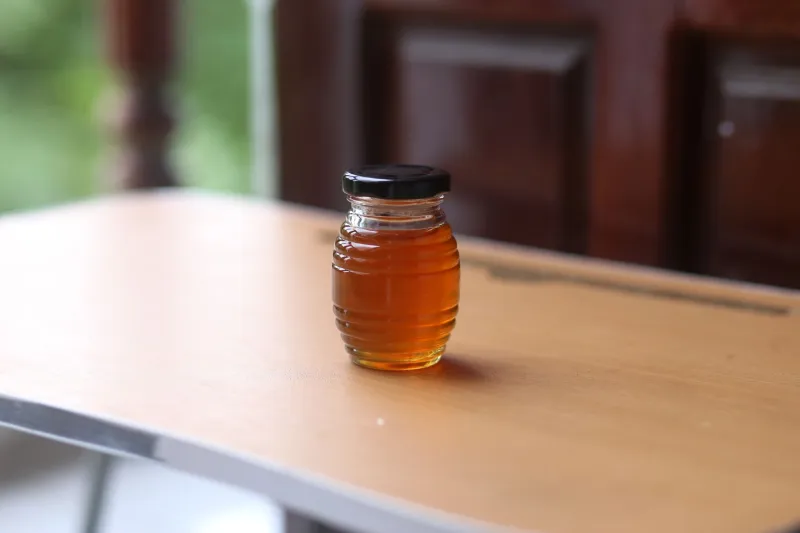
There is perhaps no ingredient in the American kitchen more universally recognized and more profoundly misunderstood than honey. For generations, the golden syrup has occupied a modest corner of the pantry — useful for sweetening tea, glazing a ham, or stirring into oatmeal — but rarely considered with the same reverence granted to a fine olive oil, an aged vinegar, or a carefully sourced sea salt. That distinction, it turns out, has always been unearned. Honey, in its truest and least processed form, is one of the most complex flavor substances a cook can possess. And across the United States, a dedicated community of small-scale apiarists is working quietly and deliberately to make that case.
The Terroir Beneath the Hive
The concept of terroir — the idea that a food or beverage carries the sensory imprint of its geographic origin — has long been applied to wine, cheese, and coffee. Honey, however, may be its most direct expression. A colony of honeybees foraging within a two-to-three-mile radius of their hive will visit millions of blossoms over the course of a season, and the nectar they collect is an exquisitely precise record of that landscape. The resulting honey is not merely sweet; it is a distillation of place.
Consider the difference between a raw tupelo honey sourced from the Apalachicola River basin of the Florida Panhandle — prized for its buttery, almost vanilla-tinged sweetness and its notably low sucrose content — and a buckwheat varietal harvested from small farms across New York's Hudson Valley, which presents with a dark, molasses-like depth and a faintly earthy finish that can stand alongside aged cheeses and bitter greens with remarkable authority. Neither of these honeys could reasonably be called interchangeable, and neither bears much resemblance to the commodity product that fills supermarket shelves by the millions of pounds each year.
America's craft beekeepers understand this distinction intimately. Many of them manage small apiaries of between ten and fifty hives, positioning their colonies with careful intention near single-source nectar flows — orange blossoms in California and Florida, sourwood in the southern Appalachians, star thistle across the Pacific Northwest, black locust in the mid-Atlantic states. The result is a category of monofloral honeys with flavor profiles as distinct and discussable as any fine wine.
Raw Versus Processed: A Difference Worth Understanding
For the home cook approaching honey with fresh curiosity, one distinction is foundational: the difference between raw and commercially processed honey. Most honey sold through large-scale distribution channels has been heated to high temperatures, a process that extends shelf life and ensures a uniform, pourable consistency, but that also destroys the naturally occurring enzymes, pollen particles, antioxidants, and aromatic volatile compounds that give raw honey its complexity and much of its nutritional character.
Raw honey, by contrast, is extracted from the comb at low temperatures, strained rather than filtered, and bottled with its full biochemical profile intact. It may crystallize over time — a sign of quality, not spoilage — and its texture can range from silky and fluid to thick and almost spreadable, depending on the floral source and the ambient conditions during harvest. Some craft producers deliberately cream their raw honey through a slow churning process, producing a product with a smooth, whipped consistency that many cooks find particularly elegant as a finishing element.
The flavor difference is not subtle. Taste a raw wildflower honey from a small Oregon apiary alongside a standard supermarket product, and the contrast is immediate: one is alive with floral top notes, a mild acidity, and a lingering finish; the other is simply sweet.
Honey as a Finishing Ingredient
The most significant shift in how discerning American home cooks are beginning to think about honey involves its role at the end of cooking rather than the beginning. For years, honey has been deployed primarily as a baking sweetener or a marinade component — applications that, while valid, tend to obscure rather than celebrate its more nuanced qualities. Craft beekeepers and the culinary professionals who work alongside them have been making a different argument: that the finest raw honeys are best appreciated when added after heat, in small quantities, as a finishing element that introduces complexity and contrast.
A drizzle of raw sourwood honey over a wedge of aged cheddar, a spoonful of dark buckwheat honey stirred into a pan sauce at the last moment, a thread of delicate acacia honey across a composed salad of bitter radicchio and toasted walnuts — in each case, the honey is not merely sweetening the dish but contributing a layered flavor note that lifts and completes the whole. This is precisely the role occupied by a fine finishing vinegar or an exceptional flake salt, and it demands the same quality of ingredient.
Sustainable Practice and the Meaning of Small-Scale Production
Beyond flavor, America's craft beekeeping movement is embedded in a broader conversation about agricultural sustainability and ecological stewardship. Honeybee populations have faced well-documented pressures in recent decades, from colony collapse disorder to habitat loss and pesticide exposure. Small-scale apiarists operating within the craft honey movement tend to prioritize hive health over maximum yield, favoring low-intervention management practices, chemical-free treatments, and the cultivation of diverse forage landscapes that support not only their own colonies but native pollinators as well.
Many of these producers maintain deep ties to the farms and landscapes that surround their apiaries, functioning as informal stewards of the floral ecosystems their bees depend upon. Purchasing honey from these sources is, in a meaningful sense, an investment in the continued health of those landscapes — a consideration that aligns naturally with the values of a home cook who cares about the provenance of what enters the kitchen.
Building a Honey Collection Worth Having
For the cook ready to approach honey as a serious pantry category, the practical advice is straightforward: begin with diversity. Seek out two or three varietal raw honeys with genuinely distinct flavor profiles — perhaps a light, floral clover or orange blossom for delicate applications, a medium-bodied wildflower for general use, and a robust buckwheat or dark wildflower for pairing with strong cheeses, roasted meats, and grain-forward preparations. Farmers markets, specialty food retailers, and the growing number of small apiary websites offering direct-to-consumer sales are all reliable sources.
Store raw honey at room temperature, away from direct sunlight, and resist the impulse to microwave crystallized product into liquidity. Instead, set the jar in a bowl of warm water and allow it to return to a pourable state gently — a small act of patience that preserves everything worth preserving.
The bear-shaped bottle has its place. But the world beyond it is considerably more interesting, and the cooks who venture there tend not to return.