Bitter, Bright, and Considered: The Artisan Preserve Makers Transforming Citrus into a Pantry Essential
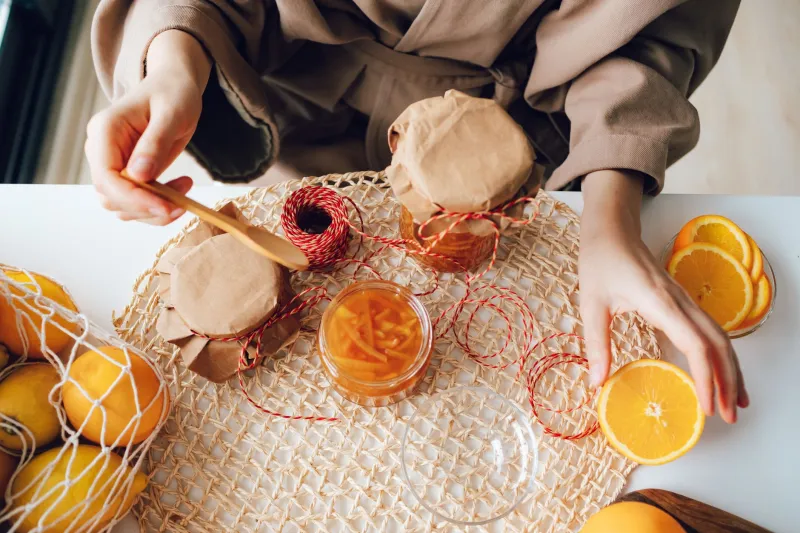
Marmalade has an image problem, and the people working hardest to solve it are the ones making the best of it. Ask most American home cooks what they associate with a jar of orange marmalade, and the answers tend toward the predictable: toast, perhaps, or a grandmother's kitchen. The preserve occupies a comfortable but limited space in the cultural imagination—pleasant, old-fashioned, slightly British. What it does not conjure, for most people, is culinary ambition.
That perception is changing, and the agents of change are a scattered but passionate community of small-batch preserve makers who are treating citrus with the same seriousness that their counterparts in charcuterie apply to pork, or that American vintners apply to a difficult grape variety. These artisans are sourcing Seville oranges, Buddha's hand, yuzu, bergamot, and a constellation of heirloom varieties that most American consumers have never encountered at a supermarket. They are cooking in small batches, using minimal added pectin, and constructing flavor profiles of genuine complexity. The result is a category of preserved food that belongs not merely on the breakfast table but throughout the pantry—alongside cheese, beside a roasted duck, stirred into a vinaigrette, or spread beneath a layer of frangipane in a tart.
The Citrus Question: Variety as Ingredient
The foundation of any exceptional marmalade or citrus preserve is the fruit itself, and the artisan producers who have distinguished themselves in this space understand that ingredient selection is a creative act. The difference between a marmalade made with commodity navel oranges and one made with hand-harvested Seville oranges from a California grove is not merely one of degree—it is one of character.
Seville oranges, the traditional marmalade fruit, are prized precisely for their bitterness and high pectin content. Their flesh is too sour and astringent to eat fresh, but when cooked with sugar, they yield a preserve of extraordinary depth—a balance of sweetness, acid, and that particular pleasant bitterness that makes a well-made marmalade so compelling as a condiment. American producers sourcing Seville oranges from California and Arizona growers are working with the same raw material that has defined British marmalade tradition for centuries, but applying it with a distinctly American creative sensibility.
Beyond Sevilles, the heirloom citrus revival in California has placed an astonishing range of varieties within reach of adventurous preserve makers. Bergamot—the fragrant Italian citrus that gives Earl Grey tea its distinctive character—is now being grown in limited quantities in Southern California, and a small number of preserve makers have begun incorporating it into marmalades and citrus curds of remarkable aromatic complexity. Buddha's hand, the fingered citrus whose flesh is almost entirely pith and rind, offers an intensely floral, lemon-forward fragrance that translates beautifully into preserves designed for use in baking and dessert applications.
The Architecture of a Complex Preserve
What separates an artisan marmalade from its commercial counterpart is not simply the quality of the fruit—it is the deliberateness of the entire production process. Small-batch preserve makers typically work without commercial pectin, relying instead on the natural pectin present in citrus peel and pith to achieve their set. This approach requires greater technical skill and a more intuitive understanding of the cooking process, but it produces a preserve with a softer, less uniform texture and a flavor that is not masked by the neutral sweetness that commercial pectin often introduces.
The sugar question is equally considered. While granulated white sugar remains the standard, a number of American producers are incorporating raw cane sugar, turbinado, or light muscovado into their formulas to introduce a subtle molasses note that adds warmth and depth without overwhelming the citrus. Others are working with alternative sweeteners—wildflower honey, maple syrup, or agave—to create preserves with distinctive flavor signatures suited to specific culinary applications.
Flavor pairings represent perhaps the most exciting dimension of the current artisan preserve movement. A marmalade that combines Seville orange with Calabrian chiles and a whisper of smoked sea salt is no longer a breakfast condiment—it is a glaze, a cheese accompaniment, a component in a pan sauce for pork tenderloin. Yuzu and black sesame conserves offer a bridge between Japanese and Western culinary traditions that is both intellectually interesting and practically delicious. Bergamot and black tea preserves speak directly to the aromatics they share, producing a condiment that functions beautifully alongside shortbread, clotted cream, or a ripe triple-cream brie.
Culinary Applications Worth Knowing
The home cook who approaches artisan citrus preserves as culinary ingredients rather than condiments will find their pantry significantly enriched. A few applications that demonstrate the range these products offer:
As a glaze for roasted meats: A bitter orange marmalade, thinned slightly with a splash of bourbon or apple cider vinegar and brushed onto a pork shoulder or duck leg in the final thirty minutes of roasting, caramelizes into a lacquer of extraordinary complexity. The sugar provides color and sweetness; the citrus oils and bitterness cut through the richness of the fat.
As a cheese companion: The affinity between preserved citrus and aged or washed-rind cheeses is well established in European tradition and is equally valid in an American context. A firm, aged cheddar from Vermont or a pungent taleggio-style cheese from a California creamery is transformed by a spoonful of Seville marmalade placed alongside it. The bitterness of the preserve provides a counterpoint to the fat and salt of the cheese that no other condiment quite replicates.
In pastry and baking: Citrus preserves have an honored place in the baker's pantry. Spread beneath an almond cream filling in a tart, swirled into a yeasted bun dough, or used as a filling for thumbprint cookies, a high-quality marmalade introduces flavor complexity that fruit jam cannot match. The peel, distributed throughout the preserve, provides both texture and an aromatic intensity that persists through baking.
In vinaigrettes and dressings: A teaspoon of citrus marmalade whisked into a vinaigrette in place of, or alongside, honey or sugar introduces both sweetness and a subtle bitterness that makes the dressing considerably more interesting. It pairs particularly well with bitter greens—radicchio, endive, frisée—where the parallel bitterness creates a harmonious whole.
Sourcing and Storing
Artisan citrus preserves are best sourced directly from producers at farmers' markets, through specialty food retailers, or via the growing number of online shops dedicated to small-batch preserves. When evaluating a producer, look for transparency about fruit sourcing, minimal ingredient lists, and evidence of small-batch production. A jar that lists only fruit, sugar, and lemon juice is almost always preferable to one that incorporates stabilizers, artificial pectin, or natural flavors.
Once opened, these preserves should be refrigerated and consumed within several weeks—their lower sugar content relative to commercial alternatives means they do not carry the same extended shelf life. Unopened, stored in a cool, dark pantry, most well-made citrus preserves will maintain their quality for twelve to eighteen months.
The marmalade jar, reconsidered, is one of the most compelling objects in a thoughtfully assembled pantry. Its bitterness is a gift. Its complexity is an invitation. And in the hands of America's most dedicated preserve makers, it has become something worthy of genuine celebration.