The Patient Craft: How America's Small-Scale Charcutiers Are Transforming Cured Meats Into Heirloom Pantry Staples
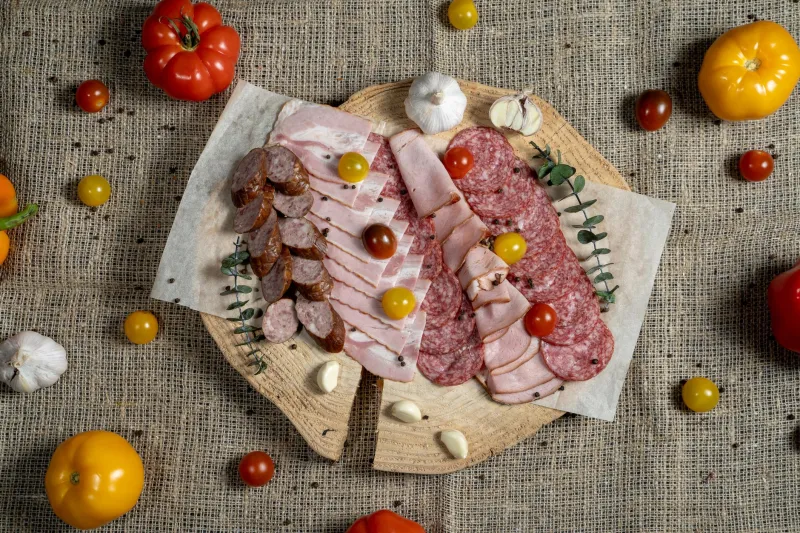
Time is the ingredient that no manufacturer can shortcut and no marketing budget can replace. The charcutier understands this in a way that few other food craftspeople do. A properly made lonza, hung in a curing chamber for three months, cannot be accelerated. A fermented salami requires its weeks of controlled temperature and humidity, during which the cultures do their slow, invisible work. The patience demanded by traditional curing is not a limitation — it is the very source of the product's value.
America has a complicated relationship with cured meats. For much of the twentieth century, the category was dominated by industrial production: standardized, efficient, and largely stripped of the regional character that once distinguished a Virginia ham from a Cajun tasso or a Pennsylvania Lebanon bologna. The craft charcuterie movement, which has gathered significant momentum over the past two decades, represents a deliberate rejection of that homogenization — and its practitioners are producing goods that belong not merely on a snack board but in the serious pantry of any cook who values complexity.
Heritage Breeds and the Foundation of Flavor
No conversation about artisanal charcuterie can begin anywhere other than the animal. The industrial pork industry selected for leanness over decades, producing animals that grow quickly and uniformly but yield meat with diminished fat quality and flavor depth. Heritage breeds — Berkshire, Mangalitsa, Red Wattle, Ossabaw Island — were developed over centuries for eating quality rather than efficiency, and their fat, in particular, carries the nuanced flavor that makes exceptional charcuterie possible.
America's small-scale charcutiers have become among the most committed supporters of heritage breed farmers, and the relationship is mutually generative. A Mangalitsa raised on pasture in the Midwest, finished on acorns or spent grain, produces fat with a creamy, almost buttery character that transforms a simple cured coppa into something that would not embarrass an Italian norcino. When this fat is combined with thoughtful seasoning and proper fermentation, the result is a product with genuine terroir — flavor that could only have come from that animal, raised in that place, by those hands.
Some producers have extended this philosophy to other species entirely. Duck prosciutto, lamb bresaola, and wild boar salami are appearing on the offerings lists of American artisan charcutiers who are not content to work within traditional pork-centric categories. Each animal brings its own fat composition and muscle structure, requiring the charcutier to adapt technique and seasoning accordingly — a creative and technical challenge that the best practitioners relish.
Wild Aromatics and Regional Spice Traditions
If the animal provides the canvas, the cure provides the composition. Salt, sugar, and curing salts form the technical foundation, but it is the aromatic layer — spices, herbs, wines, and increasingly, foraged botanicals — that gives each producer's work its distinctive voice.
Across the country, charcutiers are drawing on their immediate landscapes for aromatic inspiration. A producer in the Pacific Northwest might incorporate Douglas fir tips, dried chanterelle mushrooms, or locally harvested juniper berries into a venison salami. A Southern producer might cure country ham with sorghum rather than white sugar, then age it in a smokehouse over pecan wood. A New England artisan might finish a duck rillette with locally pressed apple brandy and wild thyme gathered from coastal meadows.
These are not gimmicks. When aromatics are sourced with care and used with restraint, they amplify rather than obscure the fundamental character of the cured meat. The result is a product that tells a story of place — the kind of flavor narrative that mass production is constitutionally incapable of providing.
Fermentation as Foundation
The fermented salami is perhaps the most technically demanding product in the charcutier's repertoire, and it is also one of the most revealing of a producer's skill. Whole-muscle cures are largely about patience and environmental control; fermented products require an additional mastery of microbial management. The bacterial cultures introduced into a salami mixture must be encouraged to lower the pH of the meat to a precise range — acidic enough to ensure safety and flavor development, but not so aggressively sour as to overwhelm the other aromatic elements.
American artisan charcutiers working in this space have invested significantly in understanding the microbiology of their craft. Some maintain house cultures passed down from earlier generations of producers or sourced from European counterparts. Others develop their own through careful selection and propagation. The flavors that result from well-managed fermentation — a subtle tang, a complex funk, a long and evolving finish — are among the most distinctive and pleasurable in the entire world of preserved foods.
For the home cook, a slice of properly fermented artisan salami is an education in what fermentation can achieve when applied with knowledge and intention. It pairs beautifully with the artisan cheeses and naturally leavened breads that share its philosophical foundation, and it belongs on any serious charcuterie board alongside pickled vegetables, quality mustards, and honey.
Building a Charcuterie Pantry with Intention
The practical question for the home cook is how to begin building a relationship with American artisan charcuterie. Unlike cheese, which can be tasted easily at a counter, cured meats often require a degree of trust in the producer before purchase. Seeking out makers who are transparent about their sourcing — who can tell you the breed of animal, the farm of origin, and the specific curing method employed — is the most reliable starting point.
Specialty food shops with knowledgeable staff, farmers markets where the charcutier is present in person, and online platforms dedicated to American artisan food producers are all viable sources. When tasting, pay attention to texture as well as flavor: a well-made whole-muscle cure should have a clean, firm bite without being tough or dry, and the fat should be smooth and pleasant rather than waxy or rancid.
Invest in a small selection across product types — perhaps a whole-muscle cure, a fermented salami, and a spreadable product such as a pâté or rillette — and use them not just for entertaining but as genuine cooking ingredients. A few slices of artisan guanciale rendered in a pan before adding eggs or pasta changes the character of the dish entirely. Thinly sliced coppa draped over a warm flatbread with fresh ricotta and herbs is a meal of quiet magnificence.
The American charcuterie revival is, at its core, a celebration of patience, provenance, and the profound respect for ingredients that defines all truly excellent food. In that spirit, it belongs at the heart of any pantry built on the belief that abundance and quality are not competing values but natural companions.