Depth from the Ground Up: America's Small-Batch Miso and Fish Sauce Makers Are Quietly Revolutionizing the Pantry
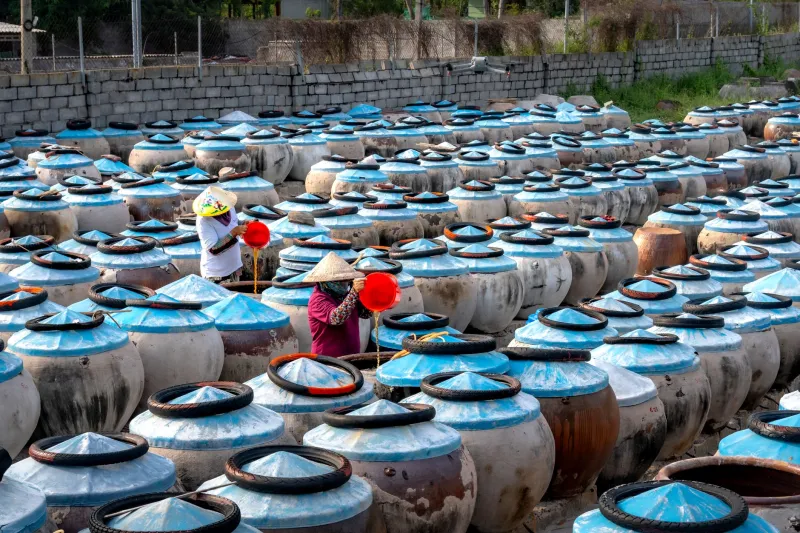
There is a particular kind of flavor that cannot be hurried. It accumulates in darkness, in ceramic crocks and cedar barrels, over weeks and months and sometimes years, as salt and microorganisms conduct their patient alchemy on beans, fish, and grain. Umami—that savory, mouth-coating richness that elevates a dish from pleasant to profound—has long been the quiet engine of the world's most compelling cuisines. And now, in kitchens and fermentation cellars across the United States, a dedicated cohort of American artisans is learning to cultivate it from scratch.
The results, increasingly available to home cooks who know where to look, are nothing short of transformative.
A Flavor Without a Simple Translation
Umami resists easy description. Identified formally by Japanese chemist Kikunae Ikeda in 1908, it is often characterized as savory, round, or deeply satisfying—the sensation that makes a spoonful of aged miso or a drop of well-made fish sauce linger on the palate in a way that salt alone cannot replicate. For generations of Western cooks, the primary vehicles for this flavor were imported: Japanese shiro or mugi miso, Thai or Vietnamese fish sauce, Korean doenjang. These remain worthy staples. But a domestic alternative is now taking shape, one that carries with it the particular promise of American terroir, American grain, and American ingenuity.
Small-batch miso production in the United States traces a quiet lineage back several decades, but the current wave of producers has brought new ambition to the craft. Working with heritage soybeans, locally grown barley, heirloom rice varieties, and in some cases entirely novel legumes—chickpeas, black-eyed peas, adzuki beans—these makers are expanding the flavor vocabulary of fermentation beyond anything a single regional tradition might have anticipated.
The Art of the Koji Connection
At the heart of both miso and many fermented condiments is koji, the mold Aspergillus oryzae, which breaks down starches and proteins into the amino acids and sugars that define fermented complexity. Cultivating koji is itself an art—one that requires precise humidity, temperature, and attentiveness over a two-day growth cycle. American producers who have mastered this step describe it with the reverence that a cheesemaker might reserve for a particularly expressive culture.
Some makers source their koji spores from Japanese suppliers; others have begun cultivating their own strains, a development that could, over time, yield distinctly American microbial signatures. The grain on which koji grows also matters enormously: barley grown in the Pacific Northwest imparts different characteristics than Carolina Gold rice or organically cultivated oats from the upper Midwest. Terroir, in the fermentation world, is no less real than in wine.
For home cooks, this means that American-made miso is not a simple substitute for its Japanese counterpart—it is a different ingredient, with its own personality. A chickpea miso from a Vermont producer will behave differently in a vinaigrette than a long-aged soybean miso from a California fermentation house. Learning to distinguish and appreciate these differences is part of what makes building a thoughtful pantry so rewarding.
Fish Sauce, Reimagined on American Shores
If miso has found an early foothold among adventurous American cooks, fish sauce has had a steeper climb. The condiment's reputation—pungent, assertive, not immediately inviting in its raw form—has long kept it at the margins of mainstream pantry culture, even as professional chefs have quietly deployed it as a seasoning agent in dishes with no Asian lineage whatsoever. A few drops in a beef braise, a dash in a Caesar dressing, a small measure stirred into tomato sauce: fish sauce, used judiciously, adds a depth that is felt rather than identified.
American producers are now crafting fish sauce from domestic catch—Gulf of Mexico anchovies, Pacific sardines, Maine smelts—packed with salt and allowed to ferment in food-grade vessels over periods ranging from six months to several years. The resulting liquid, pressed and filtered, carries flavors that reflect both the species of fish and the duration of aging. A shorter-aged sauce may retain more of the sea's brightness; a multi-year ferment develops a complexity that approaches the finest Asian imports while remaining distinctly its own creation.
Several producers have begun experimenting with regional variations: fish sauce made from freshwater species, or blended with aromatics native to the American South, or aged in barrels previously used for bourbon or apple cider vinegar. These are not gimmicks but genuine attempts to locate fermentation within a specific American place and moment.
Sourcing with Intention
For the home cook wishing to explore this category, the sourcing landscape is still maturing. A handful of dedicated online retailers now carry American-made miso and fish sauce alongside imported counterparts, and farmers' markets in larger metropolitan areas occasionally feature local fermenters. Some producers sell directly through their own websites, offering seasonal releases and small-batch runs that reward attentive shoppers.
When evaluating a product, a few markers of quality are worth noting. For miso, examine the ingredient list: well-made domestic miso typically contains only a handful of components—beans or grain, koji, salt, and time. Avoid products with preservatives or added alcohol, which inhibit the living cultures that define the condiment's character. For fish sauce, look for producers who name their fish species and disclose fermentation duration; transparency at this level generally indicates pride in process.
Storage matters as well. American-made miso, like its Japanese counterpart, benefits from refrigeration after opening and will continue to develop flavor over months. Fish sauce, by contrast, is shelf-stable and improves with time even after a bottle is opened—provided it is kept away from direct sunlight and extreme heat.
An Ingredient That Rewards Patience
There is something fitting about the fact that the most compelling pantry additions of the current moment are also the slowest to produce. In a food culture that has spent decades celebrating speed and convenience, the American fermenters working in this space are making a different kind of argument: that the most nourishing flavors are those that have been given time to become themselves.
For the discerning home cook, stocking a jar of American-made miso or a bottle of domestically produced fish sauce is not merely an act of culinary adventurism. It is an acknowledgment that flavor has a provenance, that the people who make our ingredients deserve to be known, and that the pantry—properly curated—is itself a kind of abundance. The makers working in this tradition are not simply producing condiments. They are cultivating something rarer: depth, patience, and the quiet satisfaction of a flavor that has been honestly earned.